(A
good article published by my colleague Angela. Originally published here:
http://en.jrs.net/news_detail?TN=NEWS-20150220084244 and here also in CASTELLANO)
Nairobi,
20 February 2015 – As South Sudanese leaders begin talks in Addis Ababa to
discuss the establishment of a power-sharing agreement, the Jesuit
Refugee Service (JRS) urges them, on World Social Justice Day today, to
prioritise the immediate preservation of human life and dignity in the country.
Since conflict erupted in December 2013, thousands of South Sudanese civilians have been murdered, even in places of presumed sanctuary – hospitals, schools and places of worship. Two million people have been displaced and, according to Oxfam, another two and a half million face food insecurity. In addition, armed forces have occupied more than 91 schools throughout the country and recruited thousands of children into their ranks.
In Maban country, Upper Nile state, JRS serves Sudanese refugees. Subjected to a range of human rights violations in their homes in Sudan, their harsh living conditions have been exacerbated by the conflict in South Sudan. The chances of refugees procuring resources to educate, feed and ultimately protect themselves refugees are dismal. However, living conditions in the host community are not much better. The recent violence in Jamaam displaced nearly 8,000 people from Maban, putting further pressure on overstretched humanitarian agencies.
"We had to flee because of violence. Women and children were killed; even our young girls were abducted. We feel abandoned. Often agencies just come, ask a few questions and go. We feel like strangers in our own country. We want this war to end," John*, a youth representative from Offra, a new settlement for internally displaced persons, told Pau Vidal SJ, JRS Maban Project Director.
Since conflict erupted in December 2013, thousands of South Sudanese civilians have been murdered, even in places of presumed sanctuary – hospitals, schools and places of worship. Two million people have been displaced and, according to Oxfam, another two and a half million face food insecurity. In addition, armed forces have occupied more than 91 schools throughout the country and recruited thousands of children into their ranks.
In Maban country, Upper Nile state, JRS serves Sudanese refugees. Subjected to a range of human rights violations in their homes in Sudan, their harsh living conditions have been exacerbated by the conflict in South Sudan. The chances of refugees procuring resources to educate, feed and ultimately protect themselves refugees are dismal. However, living conditions in the host community are not much better. The recent violence in Jamaam displaced nearly 8,000 people from Maban, putting further pressure on overstretched humanitarian agencies.
"We had to flee because of violence. Women and children were killed; even our young girls were abducted. We feel abandoned. Often agencies just come, ask a few questions and go. We feel like strangers in our own country. We want this war to end," John*, a youth representative from Offra, a new settlement for internally displaced persons, told Pau Vidal SJ, JRS Maban Project Director.
 |
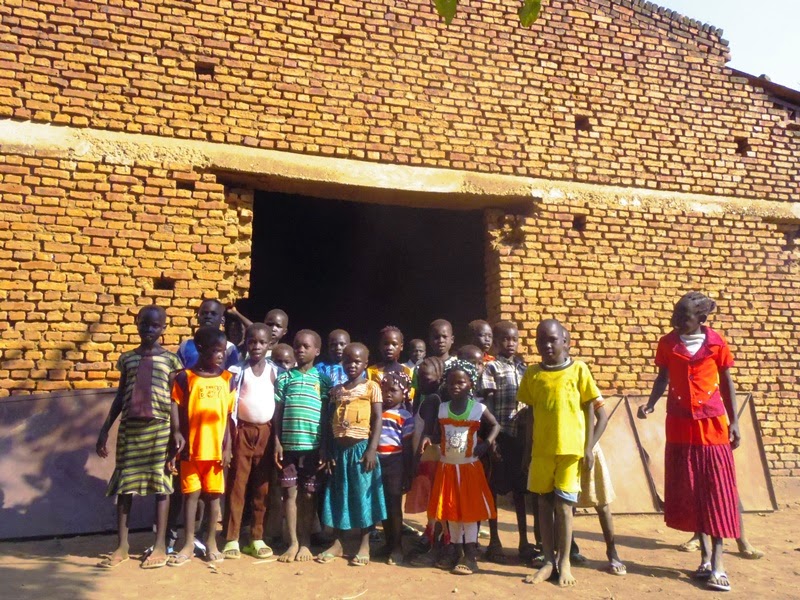
| Recently arrived Internally displaced families at Offra, Maban. February 2015_ AV_JRS |
Collective
call for peace.
JRS
commends the efforts of the international community to stand collectively for
peace in South Sudan. However, despite the ongoing presence of South Sudanese
leaders at peace negotiations, the reality on the ground has been anything but
peaceful. The cessation-of-hostilities agreement has been violated repeatedly
throughout the year, most recently on 15 February 2015. Moreover, while
peace delegates have reportedly spent more than 20 million US dollars in luxury hotels,
South Sudanese teachers have not been paid for a year.
"The aspirations of individuals and factions have led to a cycle of revenge killing…We say to all who are involved in any way: if you continue fighting, you will finish yourselves, and you will finish the nation," said the Catholic bishops of South Sudan in a recent statement.
The bishops urged the country's leaders to "have the courage to go deeper, leave aside common assumptions, think outside the political box, make unthinkable concessions and take risks to bring peace."
Referring to the war in South Sudan as evil, the bishops added, there is no moral justification for any further killing.
"We declare before God that it is evil for any party to use continuing violence to try to further their political agenda," stated the South Sudanese bishops.
Deeper justice.
"The aspirations of individuals and factions have led to a cycle of revenge killing…We say to all who are involved in any way: if you continue fighting, you will finish yourselves, and you will finish the nation," said the Catholic bishops of South Sudan in a recent statement.
The bishops urged the country's leaders to "have the courage to go deeper, leave aside common assumptions, think outside the political box, make unthinkable concessions and take risks to bring peace."
Referring to the war in South Sudan as evil, the bishops added, there is no moral justification for any further killing.
"We declare before God that it is evil for any party to use continuing violence to try to further their political agenda," stated the South Sudanese bishops.
Deeper justice.
JRS has witnessed the human cost of such violent
political agendas in South Sudan. The organisation stands in solidarity with the
bishops' call to end this senseless war. JRS also joins the many calls for
thorough investigations of those responsible for human rights abuses. There is no justification for the repeated
delay in the publication of the African Union report into human rights abuses
in South Sudan. Impunity will only breed more violence.
Unfortunately, the lack of documentation of human rights violations is another clear obstacle to the prevention of impunity. Not even UN peacekeepers have been able to keep accurate statistics of those killed. The International Crisis Group put the death toll at between 50,000 and 100,000.
While government officials and military officials from both sides seem apathetic to the loss of human life, families of the deceased are left devastated.
"Peace, justice and reconciliation cannot be left only in the hands of a few leaders, who seem to prefer prolonged ‘peace talks' as long as they get their exorbitant daily allowances in luxurious hotels. In South Sudan, too many people are becoming strangers in their own land. Enough is enough!" said Pau Vidal SJ.
Unfortunately, the lack of documentation of human rights violations is another clear obstacle to the prevention of impunity. Not even UN peacekeepers have been able to keep accurate statistics of those killed. The International Crisis Group put the death toll at between 50,000 and 100,000.
While government officials and military officials from both sides seem apathetic to the loss of human life, families of the deceased are left devastated.
"Peace, justice and reconciliation cannot be left only in the hands of a few leaders, who seem to prefer prolonged ‘peace talks' as long as they get their exorbitant daily allowances in luxurious hotels. In South Sudan, too many people are becoming strangers in their own land. Enough is enough!" said Pau Vidal SJ.
Angela Wells, JRS Eastern Africa Communications
Officer
*Name changed for reasons of security
*Name changed for reasons of security
Nairobi, 20 February 2015 – As South Sudanese leaders begin talks in Addis Ababa to discuss the establishment of a power-sharing agreement,
the Jesuit Refugee Service (JRS) urges them, on World Social Justice
Day today, to prioritise the immediate preservation of human life and
dignity in the country.
Since conflict erupted in December 2013, thousands of South Sudanese civilians have been murdered, even in places of presumed sanctuary – hospitals, schools and places of worship. Two million people have been displaced and, according to Oxfam, another two and a half million face food insecurity. In addition, armed forces have occupied more than 91 schools throughout the country and recruited thousands of children into their ranks.
In Maban country, Upper Nile state, JRS serves Sudanese refugees. Subjected to a range of human rights violations in their homes in Sudan, their harsh living conditions have been exacerbated by the conflict in South Sudan. The chances of refugees procuring resources to educate, feed and ultimately protect themselves refugees are dismal. However, living conditions in the host community are not much better. The recent violence in Jamaam displaced nearly 8,000 people from Maban, putting further pressure on overstretched humanitarian agencies.
"We had to flee because of violence. Women and children were killed; even our young girls were abducted. We feel abandoned. Often agencies just come, ask a few questions and go. We feel like strangers in our own country. We want this war to end," John*, a youth representative from Offra, a new settlement for internally displaced persons, told Pau Vidal SJ, JRS Maban Project Director.
Collective call for peace. JRS commends the efforts of the international community to stand collectively for peace in South Sudan. However, despite the ongoing presence of South Sudanese leaders at peace negotiations, the reality on the ground has been anything but peaceful. The cessation-of-hostilities agreement has been violated repeatedly throughout the year, most recently on 15 February 2015. Moreover, while peace delegates have reportedly spent more than 20 million US dollars in luxury hotels, South Sudanese teachers have not been paid for a year.
"The aspirations of individuals and factions have led to a cycle of revenge killing…We say to all who are involved in any way: if you continue fighting, you will finish yourselves, and you will finish the nation," said the Catholic bishops of South Sudan in a recent statement.
The bishops urged the country's leaders to "have the courage to go deeper, leave aside common assumptions, think outside the political box, make unthinkable concessions and take risks to bring peace."
Referring to the war in South Sudan as evil, the bishops added, there is no moral justification for any further killing.
"We declare before God that it is evil for any party to use continuing violence to try to further their political agenda," stated the South Sudanese bishops.
Deeper justice. JRS has witnessed the human cost of such violent political agendas in South Sudan. The organisation stands in solidarity with the bishops' call to end this senseless war. JRS also joins the many calls for thorough investigations of those responsible for human rights abuses. There is no justification for the repeated delay in the publication of the African Union report into human rights abuses in South Sudan. Impunity will only breed more violence.
Unfortunately, the lack of documentation of human rights violations is another clear obstacle to the prevention of impunity. Not even UN peacekeepers have been able to keep accurate statistics of those killed. The International Crisis Group put the death toll at between 50,000 and 100,000.
While government officials and military officials from both sides seem apathetic to the loss of human life, families of the deceased are left devastated.
"Peace, justice and reconciliation cannot be left only in the hands of a few leaders, who seem to prefer prolonged ‘peace talks' as long as they get their exorbitant daily allowances in luxurious hotels. In South Sudan, too many people are becoming strangers in their own land. Enough is enough!" said Pau Vidal SJ.
Since conflict erupted in December 2013, thousands of South Sudanese civilians have been murdered, even in places of presumed sanctuary – hospitals, schools and places of worship. Two million people have been displaced and, according to Oxfam, another two and a half million face food insecurity. In addition, armed forces have occupied more than 91 schools throughout the country and recruited thousands of children into their ranks.
In Maban country, Upper Nile state, JRS serves Sudanese refugees. Subjected to a range of human rights violations in their homes in Sudan, their harsh living conditions have been exacerbated by the conflict in South Sudan. The chances of refugees procuring resources to educate, feed and ultimately protect themselves refugees are dismal. However, living conditions in the host community are not much better. The recent violence in Jamaam displaced nearly 8,000 people from Maban, putting further pressure on overstretched humanitarian agencies.
"We had to flee because of violence. Women and children were killed; even our young girls were abducted. We feel abandoned. Often agencies just come, ask a few questions and go. We feel like strangers in our own country. We want this war to end," John*, a youth representative from Offra, a new settlement for internally displaced persons, told Pau Vidal SJ, JRS Maban Project Director.
Collective call for peace. JRS commends the efforts of the international community to stand collectively for peace in South Sudan. However, despite the ongoing presence of South Sudanese leaders at peace negotiations, the reality on the ground has been anything but peaceful. The cessation-of-hostilities agreement has been violated repeatedly throughout the year, most recently on 15 February 2015. Moreover, while peace delegates have reportedly spent more than 20 million US dollars in luxury hotels, South Sudanese teachers have not been paid for a year.
"The aspirations of individuals and factions have led to a cycle of revenge killing…We say to all who are involved in any way: if you continue fighting, you will finish yourselves, and you will finish the nation," said the Catholic bishops of South Sudan in a recent statement.
The bishops urged the country's leaders to "have the courage to go deeper, leave aside common assumptions, think outside the political box, make unthinkable concessions and take risks to bring peace."
Referring to the war in South Sudan as evil, the bishops added, there is no moral justification for any further killing.
"We declare before God that it is evil for any party to use continuing violence to try to further their political agenda," stated the South Sudanese bishops.
Deeper justice. JRS has witnessed the human cost of such violent political agendas in South Sudan. The organisation stands in solidarity with the bishops' call to end this senseless war. JRS also joins the many calls for thorough investigations of those responsible for human rights abuses. There is no justification for the repeated delay in the publication of the African Union report into human rights abuses in South Sudan. Impunity will only breed more violence.
Unfortunately, the lack of documentation of human rights violations is another clear obstacle to the prevention of impunity. Not even UN peacekeepers have been able to keep accurate statistics of those killed. The International Crisis Group put the death toll at between 50,000 and 100,000.
While government officials and military officials from both sides seem apathetic to the loss of human life, families of the deceased are left devastated.
"Peace, justice and reconciliation cannot be left only in the hands of a few leaders, who seem to prefer prolonged ‘peace talks' as long as they get their exorbitant daily allowances in luxurious hotels. In South Sudan, too many people are becoming strangers in their own land. Enough is enough!" said Pau Vidal SJ.
Angela Wells, JRS Eastern Africa Communications Officer
*Name changed for reasons of security
- See more at: http://en.jrs.net/news_detail?TN=NEWS-20150220084244#sthash.oFHIpYlq.dpuf*Name changed for reasons of security
Nairobi, 20 February 2015 – As South Sudanese leaders begin talks in Addis Ababa to discuss the establishment of a power-sharing agreement,
the Jesuit Refugee Service (JRS) urges them, on World Social Justice
Day today, to prioritise the immediate preservation of human life and
dignity in the country.
Since conflict erupted in December 2013, thousands of South Sudanese civilians have been murdered, even in places of presumed sanctuary – hospitals, schools and places of worship. Two million people have been displaced and, according to Oxfam, another two and a half million face food insecurity. In addition, armed forces have occupied more than 91 schools throughout the country and recruited thousands of children into their ranks.
In Maban country, Upper Nile state, JRS serves Sudanese refugees. Subjected to a range of human rights violations in their homes in Sudan, their harsh living conditions have been exacerbated by the conflict in South Sudan. The chances of refugees procuring resources to educate, feed and ultimately protect themselves refugees are dismal. However, living conditions in the host community are not much better. The recent violence in Jamaam displaced nearly 8,000 people from Maban, putting further pressure on overstretched humanitarian agencies.
"We had to flee because of violence. Women and children were killed; even our young girls were abducted. We feel abandoned. Often agencies just come, ask a few questions and go. We feel like strangers in our own country. We want this war to end," John*, a youth representative from Offra, a new settlement for internally displaced persons, told Pau Vidal SJ, JRS Maban Project Director.
Collective call for peace. JRS commends the efforts of the international community to stand collectively for peace in South Sudan. However, despite the ongoing presence of South Sudanese leaders at peace negotiations, the reality on the ground has been anything but peaceful. The cessation-of-hostilities agreement has been violated repeatedly throughout the year, most recently on 15 February 2015. Moreover, while peace delegates have reportedly spent more than 20 million US dollars in luxury hotels, South Sudanese teachers have not been paid for a year.
"The aspirations of individuals and factions have led to a cycle of revenge killing…We say to all who are involved in any way: if you continue fighting, you will finish yourselves, and you will finish the nation," said the Catholic bishops of South Sudan in a recent statement.
The bishops urged the country's leaders to "have the courage to go deeper, leave aside common assumptions, think outside the political box, make unthinkable concessions and take risks to bring peace."
Referring to the war in South Sudan as evil, the bishops added, there is no moral justification for any further killing.
"We declare before God that it is evil for any party to use continuing violence to try to further their political agenda," stated the South Sudanese bishops.
Deeper justice. JRS has witnessed the human cost of such violent political agendas in South Sudan. The organisation stands in solidarity with the bishops' call to end this senseless war. JRS also joins the many calls for thorough investigations of those responsible for human rights abuses. There is no justification for the repeated delay in the publication of the African Union report into human rights abuses in South Sudan. Impunity will only breed more violence.
Unfortunately, the lack of documentation of human rights violations is another clear obstacle to the prevention of impunity. Not even UN peacekeepers have been able to keep accurate statistics of those killed. The International Crisis Group put the death toll at between 50,000 and 100,000.
While government officials and military officials from both sides seem apathetic to the loss of human life, families of the deceased are left devastated.
"Peace, justice and reconciliation cannot be left only in the hands of a few leaders, who seem to prefer prolonged ‘peace talks' as long as they get their exorbitant daily allowances in luxurious hotels. In South Sudan, too many people are becoming strangers in their own land. Enough is enough!" said Pau Vidal SJ.
Since conflict erupted in December 2013, thousands of South Sudanese civilians have been murdered, even in places of presumed sanctuary – hospitals, schools and places of worship. Two million people have been displaced and, according to Oxfam, another two and a half million face food insecurity. In addition, armed forces have occupied more than 91 schools throughout the country and recruited thousands of children into their ranks.
In Maban country, Upper Nile state, JRS serves Sudanese refugees. Subjected to a range of human rights violations in their homes in Sudan, their harsh living conditions have been exacerbated by the conflict in South Sudan. The chances of refugees procuring resources to educate, feed and ultimately protect themselves refugees are dismal. However, living conditions in the host community are not much better. The recent violence in Jamaam displaced nearly 8,000 people from Maban, putting further pressure on overstretched humanitarian agencies.
"We had to flee because of violence. Women and children were killed; even our young girls were abducted. We feel abandoned. Often agencies just come, ask a few questions and go. We feel like strangers in our own country. We want this war to end," John*, a youth representative from Offra, a new settlement for internally displaced persons, told Pau Vidal SJ, JRS Maban Project Director.
Collective call for peace. JRS commends the efforts of the international community to stand collectively for peace in South Sudan. However, despite the ongoing presence of South Sudanese leaders at peace negotiations, the reality on the ground has been anything but peaceful. The cessation-of-hostilities agreement has been violated repeatedly throughout the year, most recently on 15 February 2015. Moreover, while peace delegates have reportedly spent more than 20 million US dollars in luxury hotels, South Sudanese teachers have not been paid for a year.
"The aspirations of individuals and factions have led to a cycle of revenge killing…We say to all who are involved in any way: if you continue fighting, you will finish yourselves, and you will finish the nation," said the Catholic bishops of South Sudan in a recent statement.
The bishops urged the country's leaders to "have the courage to go deeper, leave aside common assumptions, think outside the political box, make unthinkable concessions and take risks to bring peace."
Referring to the war in South Sudan as evil, the bishops added, there is no moral justification for any further killing.
"We declare before God that it is evil for any party to use continuing violence to try to further their political agenda," stated the South Sudanese bishops.
Deeper justice. JRS has witnessed the human cost of such violent political agendas in South Sudan. The organisation stands in solidarity with the bishops' call to end this senseless war. JRS also joins the many calls for thorough investigations of those responsible for human rights abuses. There is no justification for the repeated delay in the publication of the African Union report into human rights abuses in South Sudan. Impunity will only breed more violence.
Unfortunately, the lack of documentation of human rights violations is another clear obstacle to the prevention of impunity. Not even UN peacekeepers have been able to keep accurate statistics of those killed. The International Crisis Group put the death toll at between 50,000 and 100,000.
While government officials and military officials from both sides seem apathetic to the loss of human life, families of the deceased are left devastated.
"Peace, justice and reconciliation cannot be left only in the hands of a few leaders, who seem to prefer prolonged ‘peace talks' as long as they get their exorbitant daily allowances in luxurious hotels. In South Sudan, too many people are becoming strangers in their own land. Enough is enough!" said Pau Vidal SJ.
Angela Wells, JRS Eastern Africa Communications Officer
*Name changed for reasons of security
- See more at: http://en.jrs.net/news_detail?TN=NEWS-20150220084244#sthash.oFHIpYlq.dpuf*Name changed for reasons of security
Nairobi, 20 February 2015 – As South Sudanese leaders begin talks in Addis Ababa to discuss the establishment of a power-sharing agreement,
the Jesuit Refugee Service (JRS) urges them, on World Social Justice
Day today, to prioritise the immediate preservation of human life and
dignity in the country.
Since conflict erupted in December 2013, thousands of South Sudanese civilians have been murdered, even in places of presumed sanctuary – hospitals, schools and places of worship. Two million people have been displaced and, according to Oxfam, another two and a half million face food insecurity. In addition, armed forces have occupied more than 91 schools throughout the country and recruited thousands of children into their ranks.
In Maban country, Upper Nile state, JRS serves Sudanese refugees. Subjected to a range of human rights violations in their homes in Sudan, their harsh living conditions have been exacerbated by the conflict in South Sudan. The chances of refugees procuring resources to educate, feed and ultimately protect themselves refugees are dismal. However, living conditions in the host community are not much better. The recent violence in Jamaam displaced nearly 8,000 people from Maban, putting further pressure on overstretched humanitarian agencies.
"We had to flee because of violence. Women and children were killed; even our young girls were abducted. We feel abandoned. Often agencies just come, ask a few questions and go. We feel like strangers in our own country. We want this war to end," John*, a youth representative from Offra, a new settlement for internally displaced persons, told Pau Vidal SJ, JRS Maban Project Director.
Collective call for peace. JRS commends the efforts of the international community to stand collectively for peace in South Sudan. However, despite the ongoing presence of South Sudanese leaders at peace negotiations, the reality on the ground has been anything but peaceful. The cessation-of-hostilities agreement has been violated repeatedly throughout the year, most recently on 15 February 2015. Moreover, while peace delegates have reportedly spent more than 20 million US dollars in luxury hotels, South Sudanese teachers have not been paid for a year.
"The aspirations of individuals and factions have led to a cycle of revenge killing…We say to all who are involved in any way: if you continue fighting, you will finish yourselves, and you will finish the nation," said the Catholic bishops of South Sudan in a recent statement.
The bishops urged the country's leaders to "have the courage to go deeper, leave aside common assumptions, think outside the political box, make unthinkable concessions and take risks to bring peace."
Referring to the war in South Sudan as evil, the bishops added, there is no moral justification for any further killing.
"We declare before God that it is evil for any party to use continuing violence to try to further their political agenda," stated the South Sudanese bishops.
Deeper justice. JRS has witnessed the human cost of such violent political agendas in South Sudan. The organisation stands in solidarity with the bishops' call to end this senseless war. JRS also joins the many calls for thorough investigations of those responsible for human rights abuses. There is no justification for the repeated delay in the publication of the African Union report into human rights abuses in South Sudan. Impunity will only breed more violence.
Unfortunately, the lack of documentation of human rights violations is another clear obstacle to the prevention of impunity. Not even UN peacekeepers have been able to keep accurate statistics of those killed. The International Crisis Group put the death toll at between 50,000 and 100,000.
While government officials and military officials from both sides seem apathetic to the loss of human life, families of the deceased are left devastated.
"Peace, justice and reconciliation cannot be left only in the hands of a few leaders, who seem to prefer prolonged ‘peace talks' as long as they get their exorbitant daily allowances in luxurious hotels. In South Sudan, too many people are becoming strangers in their own land. Enough is enough!" said Pau Vidal SJ.
Since conflict erupted in December 2013, thousands of South Sudanese civilians have been murdered, even in places of presumed sanctuary – hospitals, schools and places of worship. Two million people have been displaced and, according to Oxfam, another two and a half million face food insecurity. In addition, armed forces have occupied more than 91 schools throughout the country and recruited thousands of children into their ranks.
In Maban country, Upper Nile state, JRS serves Sudanese refugees. Subjected to a range of human rights violations in their homes in Sudan, their harsh living conditions have been exacerbated by the conflict in South Sudan. The chances of refugees procuring resources to educate, feed and ultimately protect themselves refugees are dismal. However, living conditions in the host community are not much better. The recent violence in Jamaam displaced nearly 8,000 people from Maban, putting further pressure on overstretched humanitarian agencies.
"We had to flee because of violence. Women and children were killed; even our young girls were abducted. We feel abandoned. Often agencies just come, ask a few questions and go. We feel like strangers in our own country. We want this war to end," John*, a youth representative from Offra, a new settlement for internally displaced persons, told Pau Vidal SJ, JRS Maban Project Director.
Collective call for peace. JRS commends the efforts of the international community to stand collectively for peace in South Sudan. However, despite the ongoing presence of South Sudanese leaders at peace negotiations, the reality on the ground has been anything but peaceful. The cessation-of-hostilities agreement has been violated repeatedly throughout the year, most recently on 15 February 2015. Moreover, while peace delegates have reportedly spent more than 20 million US dollars in luxury hotels, South Sudanese teachers have not been paid for a year.
"The aspirations of individuals and factions have led to a cycle of revenge killing…We say to all who are involved in any way: if you continue fighting, you will finish yourselves, and you will finish the nation," said the Catholic bishops of South Sudan in a recent statement.
The bishops urged the country's leaders to "have the courage to go deeper, leave aside common assumptions, think outside the political box, make unthinkable concessions and take risks to bring peace."
Referring to the war in South Sudan as evil, the bishops added, there is no moral justification for any further killing.
"We declare before God that it is evil for any party to use continuing violence to try to further their political agenda," stated the South Sudanese bishops.
Deeper justice. JRS has witnessed the human cost of such violent political agendas in South Sudan. The organisation stands in solidarity with the bishops' call to end this senseless war. JRS also joins the many calls for thorough investigations of those responsible for human rights abuses. There is no justification for the repeated delay in the publication of the African Union report into human rights abuses in South Sudan. Impunity will only breed more violence.
Unfortunately, the lack of documentation of human rights violations is another clear obstacle to the prevention of impunity. Not even UN peacekeepers have been able to keep accurate statistics of those killed. The International Crisis Group put the death toll at between 50,000 and 100,000.
While government officials and military officials from both sides seem apathetic to the loss of human life, families of the deceased are left devastated.
"Peace, justice and reconciliation cannot be left only in the hands of a few leaders, who seem to prefer prolonged ‘peace talks' as long as they get their exorbitant daily allowances in luxurious hotels. In South Sudan, too many people are becoming strangers in their own land. Enough is enough!" said Pau Vidal SJ.
Angela Wells, JRS Eastern Africa Communications Officer
*Name changed for reasons of security
- See more at: http://en.jrs.net/news_detail?TN=NEWS-20150220084244#sthash.oFHIpYlq.dpuf*Name changed for reasons of security
Nairobi, 20 February 2015 – As South Sudanese leaders begin talks in Addis Ababa to discuss the establishment of a power-sharing agreement,
the Jesuit Refugee Service (JRS) urges them, on World Social Justice
Day today, to prioritise the immediate preservation of human life and
dignity in the country.
Since conflict erupted in December 2013, thousands of South Sudanese civilians have been murdered, even in places of presumed sanctuary – hospitals, schools and places of worship. Two million people have been displaced and, according to Oxfam, another two and a half million face food insecurity. In addition, armed forces have occupied more than 91 schools throughout the country and recruited thousands of children into their ranks.
In Maban country, Upper Nile state, JRS serves Sudanese refugees. Subjected to a range of human rights violations in their homes in Sudan, their harsh living conditions have been exacerbated by the conflict in South Sudan. The chances of refugees procuring resources to educate, feed and ultimately protect themselves refugees are dismal. However, living conditions in the host community are not much better. The recent violence in Jamaam displaced nearly 8,000 people from Maban, putting further pressure on overstretched humanitarian agencies.
"We had to flee because of violence. Women and children were killed; even our young girls were abducted. We feel abandoned. Often agencies just come, ask a few questions and go. We feel like strangers in our own country. We want this war to end," John*, a youth representative from Offra, a new settlement for internally displaced persons, told Pau Vidal SJ, JRS Maban Project Director.
Collective call for peace. JRS commends the efforts of the international community to stand collectively for peace in South Sudan. However, despite the ongoing presence of South Sudanese leaders at peace negotiations, the reality on the ground has been anything but peaceful. The cessation-of-hostilities agreement has been violated repeatedly throughout the year, most recently on 15 February 2015. Moreover, while peace delegates have reportedly spent more than 20 million US dollars in luxury hotels, South Sudanese teachers have not been paid for a year.
"The aspirations of individuals and factions have led to a cycle of revenge killing…We say to all who are involved in any way: if you continue fighting, you will finish yourselves, and you will finish the nation," said the Catholic bishops of South Sudan in a recent statement.
The bishops urged the country's leaders to "have the courage to go deeper, leave aside common assumptions, think outside the political box, make unthinkable concessions and take risks to bring peace."
Referring to the war in South Sudan as evil, the bishops added, there is no moral justification for any further killing.
"We declare before God that it is evil for any party to use continuing violence to try to further their political agenda," stated the South Sudanese bishops.
Deeper justice. JRS has witnessed the human cost of such violent political agendas in South Sudan. The organisation stands in solidarity with the bishops' call to end this senseless war. JRS also joins the many calls for thorough investigations of those responsible for human rights abuses. There is no justification for the repeated delay in the publication of the African Union report into human rights abuses in South Sudan. Impunity will only breed more violence.
Unfortunately, the lack of documentation of human rights violations is another clear obstacle to the prevention of impunity. Not even UN peacekeepers have been able to keep accurate statistics of those killed. The International Crisis Group put the death toll at between 50,000 and 100,000.
While government officials and military officials from both sides seem apathetic to the loss of human life, families of the deceased are left devastated.
"Peace, justice and reconciliation cannot be left only in the hands of a few leaders, who seem to prefer prolonged ‘peace talks' as long as they get their exorbitant daily allowances in luxurious hotels. In South Sudan, too many people are becoming strangers in their own land. Enough is enough!" said Pau Vidal SJ.
Since conflict erupted in December 2013, thousands of South Sudanese civilians have been murdered, even in places of presumed sanctuary – hospitals, schools and places of worship. Two million people have been displaced and, according to Oxfam, another two and a half million face food insecurity. In addition, armed forces have occupied more than 91 schools throughout the country and recruited thousands of children into their ranks.
In Maban country, Upper Nile state, JRS serves Sudanese refugees. Subjected to a range of human rights violations in their homes in Sudan, their harsh living conditions have been exacerbated by the conflict in South Sudan. The chances of refugees procuring resources to educate, feed and ultimately protect themselves refugees are dismal. However, living conditions in the host community are not much better. The recent violence in Jamaam displaced nearly 8,000 people from Maban, putting further pressure on overstretched humanitarian agencies.
"We had to flee because of violence. Women and children were killed; even our young girls were abducted. We feel abandoned. Often agencies just come, ask a few questions and go. We feel like strangers in our own country. We want this war to end," John*, a youth representative from Offra, a new settlement for internally displaced persons, told Pau Vidal SJ, JRS Maban Project Director.
Collective call for peace. JRS commends the efforts of the international community to stand collectively for peace in South Sudan. However, despite the ongoing presence of South Sudanese leaders at peace negotiations, the reality on the ground has been anything but peaceful. The cessation-of-hostilities agreement has been violated repeatedly throughout the year, most recently on 15 February 2015. Moreover, while peace delegates have reportedly spent more than 20 million US dollars in luxury hotels, South Sudanese teachers have not been paid for a year.
"The aspirations of individuals and factions have led to a cycle of revenge killing…We say to all who are involved in any way: if you continue fighting, you will finish yourselves, and you will finish the nation," said the Catholic bishops of South Sudan in a recent statement.
The bishops urged the country's leaders to "have the courage to go deeper, leave aside common assumptions, think outside the political box, make unthinkable concessions and take risks to bring peace."
Referring to the war in South Sudan as evil, the bishops added, there is no moral justification for any further killing.
"We declare before God that it is evil for any party to use continuing violence to try to further their political agenda," stated the South Sudanese bishops.
Deeper justice. JRS has witnessed the human cost of such violent political agendas in South Sudan. The organisation stands in solidarity with the bishops' call to end this senseless war. JRS also joins the many calls for thorough investigations of those responsible for human rights abuses. There is no justification for the repeated delay in the publication of the African Union report into human rights abuses in South Sudan. Impunity will only breed more violence.
Unfortunately, the lack of documentation of human rights violations is another clear obstacle to the prevention of impunity. Not even UN peacekeepers have been able to keep accurate statistics of those killed. The International Crisis Group put the death toll at between 50,000 and 100,000.
While government officials and military officials from both sides seem apathetic to the loss of human life, families of the deceased are left devastated.
"Peace, justice and reconciliation cannot be left only in the hands of a few leaders, who seem to prefer prolonged ‘peace talks' as long as they get their exorbitant daily allowances in luxurious hotels. In South Sudan, too many people are becoming strangers in their own land. Enough is enough!" said Pau Vidal SJ.
Angela Wells, JRS Eastern Africa Communications Officer
*Name changed for reasons of security
- See more at: http://en.jrs.net/news_detail?TN=NEWS-20150220084244#sthash.oFHIpYlq.dpuf*Name changed for reasons of security